
Table of Contents
Event management has evolved dramatically in recent years. Whether organizing a conference, concert, festival, corporate event, or workshop, organizers must manage thousands of attendees efficiently while ensuring smooth entry and accurate attendance tracking.
One technology that has become essential for modern events is the QR code for event tickets with scan tracking. QR-based ticket systems allow organizers to distribute digital tickets that can be scanned at entry points while simultaneously recording attendance data and preventing fraud.
Instead of relying on paper tickets or manual check-ins, QR ticket systems automate event entry, improve security, and provide valuable analytics insights.
In this guide, you will learn:
- How QR code event tickets work
- How scan tracking records attendance data
- The difference between static and dynamic QR tickets
- Step-by-step instructions to create QR code tickets
- Best tools for event QR ticket systems
- How to prevent ticket fraud
- Analytics insights for event organizers
- Optimization strategies for large events
By the end, you will understand how QR code ticket systems transform event operations into a streamlined and data-driven process.
What Is a QR Code Event Ticket?
A QR code event ticket is a digital ticket containing a unique QR code that allows attendees to gain entry to an event.
Each QR code acts as a digital identifier. When scanned at the entrance, the event system verifies the ticket and logs the attendee’s entry.
The process works like this:
- An attendee purchases or receives a digital ticket.
- The ticket contains a QR code linked to the event system.
- At the event entrance, staff scan the QR code.
- The system verifies the ticket and records the scan.
This eliminates the need for printed tickets and allows for fast, contactless entry.
QR tickets can be delivered through:
- email confirmations
- mobile event apps
- downloadable PDF tickets
- SMS links
Because most smartphones include built-in QR scanning capabilities, the system is accessible and easy to implement.
Why Events Use QR Code Ticket Systems
Event organizers adopt QR ticket systems for several important reasons.
Faster Check-In
Scanning QR codes is significantly faster than manual ticket verification.
Large events can process hundreds of attendees per minute using QR scanning.
Contactless Entry
QR ticket systems support touchless check-in, which became popular during the pandemic but remains valuable for convenience.
Attendees simply show their ticket on their smartphone.
Reduced Printing Costs
Traditional ticket printing can be expensive for large events.
QR tickets eliminate printing entirely.
Better Event Security
Each ticket contains a unique code that can be validated instantly, reducing ticket fraud.
Real-Time Attendance Tracking
QR scan tracking provides real-time insights into attendance.
Organizers can see:
- how many attendees entered
- entry times
- attendance patterns
This information helps improve future events.
How QR Code Ticket Scan Tracking Works
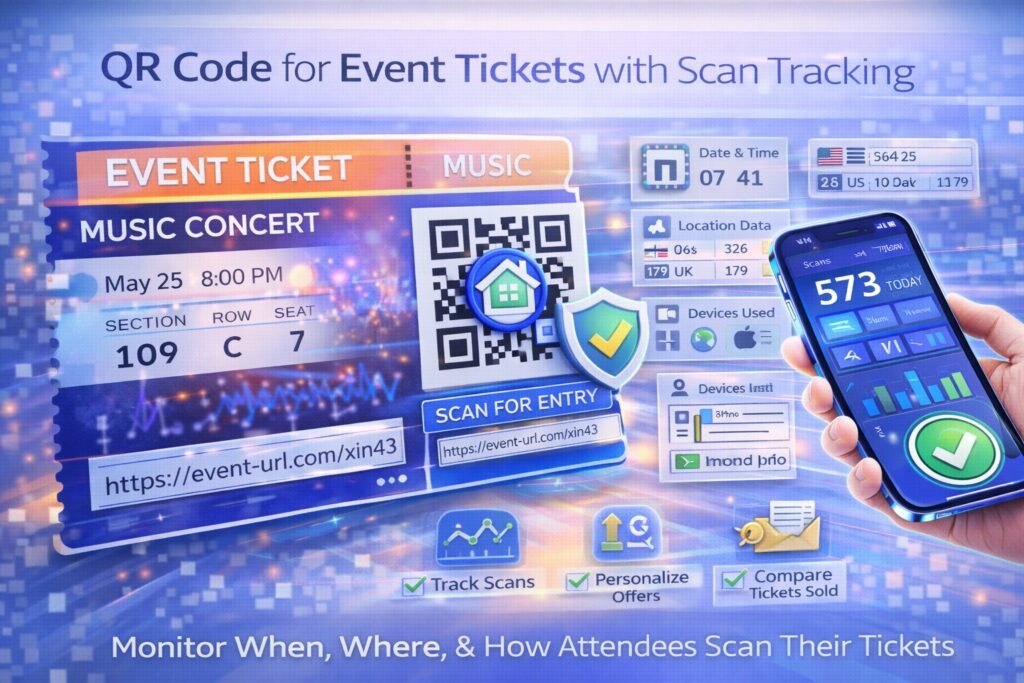
One of the most powerful features of a QR code for event tickets with scan tracking is the ability to record attendance data automatically.
Scan tracking works through a digital ticket management system.
When a QR code is scanned:
- The scanner reads the QR code.
- The system checks the ticket ID in the database.
- If valid, the ticket is marked as checked-in.
- The scan event is logged.
Typical scan data recorded includes:
- ticket ID
- scan timestamp
- entry gate location
- scanner device
- duplicate scan attempts
This information allows event organizers to monitor attendance and detect potential fraud.
Dynamic QR platforms such as ProQRCodeGenerator.com support scan tracking analytics that allow organizers to view ticket engagement data through dashboards.
Static vs Dynamic QR Tickets
QR code tickets can be generated using static or dynamic QR codes.
| Feature | Static QR Ticket | Dynamic QR Ticket |
|---|---|---|
| Scan tracking | ❌ No | ✅ Yes |
| Ticket validation | Basic | Advanced |
| Analytics dashboard | ❌ | ✅ |
| Editing capability | ❌ | ✅ |
Static QR Tickets
Static QR codes contain fixed information encoded directly inside the code.
Example:
TicketID: 103245
Static QR codes cannot easily track scans or detect duplicate use.
Dynamic QR Tickets
Dynamic QR codes use a server-based verification system.
When scanned:
- The scan request goes to the ticket server.
- The system validates the ticket ID.
- Attendance data is recorded.
Dynamic QR codes allow real-time monitoring of ticket usage and provide analytics insights.
Platforms like ProQRCodeGenerator.com allow event organizers to generate dynamic QR tickets with scan tracking and analytics dashboards.
Step-by-Step Guide to Creating QR Event Tickets
Creating QR code event tickets involves several steps.
Step 1 – Prepare Attendee Data
First create a list of ticket holders.
This may include:
- attendee names
- ticket IDs
- ticket types
- email addresses
Step 2 – Generate Unique QR Codes
Each attendee receives a unique QR code linked to their ticket ID.
Example encoded data:
EventID-2026-Ticket-45823
This ensures each ticket can be verified.
Step 3 – Design the Ticket
Digital tickets typically include:
- event name
- date and location
- QR code
- ticket holder name
- seat number (if applicable)
Step 4 – Distribute Tickets
Tickets can be delivered through:
- email confirmations
- event mobile apps
- downloadable PDF tickets
Step 5 – Set Up Scanning Devices
At the event entrance, staff use QR scanners or mobile apps to validate tickets.
Step 6 – Monitor Scan Analytics
During the event, organizers can monitor attendance in real time through analytics dashboards.
Tools for QR Code Event Ticket Systems
Event organizers need reliable ticket management systems.
Important features include:
- dynamic QR ticket generation
- scan tracking
- analytics dashboards
- fraud detection
- ticket validation tools
Platforms such as ProQRCodeGenerator.com allow event organizers to generate dynamic QR codes that support scan tracking, analytics monitoring, and ticket management workflows.
Using a professional platform ensures stable ticket verification and reliable event operations.
Event Analytics and Scan Tracking Insights
QR ticket systems generate valuable event data.
Organizers can track metrics such as:
- total tickets scanned
- unique attendees
- entry time patterns
- peak check-in times
Example scan dashboard:
| Metric | Example |
|---|---|
| Tickets issued | 1500 |
| Tickets scanned | 1200 |
| Peak entry time | 6:30 PM |
| Duplicate scans blocked | 15 |
These insights help organizers improve logistics and staffing for future events.
Event Industry Use Cases
QR ticket systems are used across many event types.
Concerts
Music venues use QR tickets for rapid crowd entry.
Conferences
Professional conferences use QR codes for attendee badges and session access.
Festivals
Large festivals manage thousands of attendees using QR ticket validation.
Corporate Events
Companies use QR codes for employee check-ins and guest management.
Workshops and Seminars
Smaller events use QR codes for registration verification.
Security and Ticket Fraud Prevention
Ticket fraud is a major concern for event organizers.
QR ticket systems help prevent fraud through several methods.
Unique Ticket Identifiers
Each ticket has a unique ID.
Duplicate Scan Detection
If a QR ticket is scanned twice, the system can flag or block the second attempt.
Secure Verification Servers
Dynamic QR tickets rely on server validation to prevent unauthorized entry.
Professional platforms implement secure infrastructure to ensure reliable ticket validation.
ROI of QR Ticket Systems
QR ticket systems improve operational efficiency.
Benefits include:
- reduced check-in time
- fewer staff needed at entry gates
- lower printing costs
- improved attendance data
Example scenario:
An event with 2000 attendees reduces entry time by 50% using QR scanning compared to manual ticket checks.
This improves the overall attendee experience and reduces congestion at entry points.
Common Mistakes Event Organizers Make
Several mistakes can reduce the effectiveness of QR ticket systems.
Poor Entry Scanning Setup
Insufficient scanners can slow entry.
Using Static QR Tickets
Static QR codes lack scan tracking and fraud prevention.
Not Testing Tickets Before the Event
Always test QR codes and scanners before the event begins.
Weak Internet Connectivity
Reliable internet access ensures ticket verification works smoothly.
Optimization Tips for Event QR Ticket Scanning
To improve entry efficiency:
- set up multiple scanning stations
- ensure high contrast QR designs
- test scanning speed in advance
- train staff on scanning procedures
These practices reduce entry delays.
Privacy & Security Considerations
Event organizers must protect attendee data.
Important measures include:
- secure ticket databases
- encrypted data transmission
- compliance with privacy regulations
Professional QR platforms maintain secure systems to protect both event organizers and attendees.
Frequently Asked Questions
How do QR codes work for event tickets?
QR codes contain a unique ticket identifier that is scanned and validated at event entry points.
Can QR code tickets be tracked?
Yes. Dynamic QR ticket systems record scan data and attendance analytics.
Can QR codes prevent ticket fraud?
Yes. Duplicate scans can be detected and blocked.
What devices scan QR event tickets?
Most systems use smartphone scanning apps or dedicated QR scanners.
Do QR tickets expire after scanning?
Tickets are usually marked as used after the first scan to prevent reuse.
Conclusion: Building Smarter Event Ticket Systems with QR Codes
A QR code for event tickets with scan tracking provides event organizers with a powerful tool for managing attendance, improving security, and collecting valuable analytics insights.
QR ticket systems offer several advantages:
- faster check-in
- contactless entry
- fraud prevention
- real-time attendance tracking
- operational efficiency
Dynamic QR platforms such as ProQRCodeGenerator.com enable event organizers to generate QR tickets, track scan analytics, customize branded codes, and manage ticket validation through a centralized dashboard.
As events grow larger and more complex, QR ticket technology is becoming the standard solution for modern event management.