Table of Contents
In the highly competitive arena of consumer packaged goods (CPG) and retail manufacturing, the physical box your product sits in is no longer just a protective shell—it is your most valuable owned media asset. For decades, brands have spent billions of dollars on customer acquisition, only to lose all visibility the moment a product is purchased off a retail shelf. This offline-to-online “black hole” has prevented brands from capturing first-party data, understanding post-purchase behavior, and driving direct-to-consumer (DTC) retention.
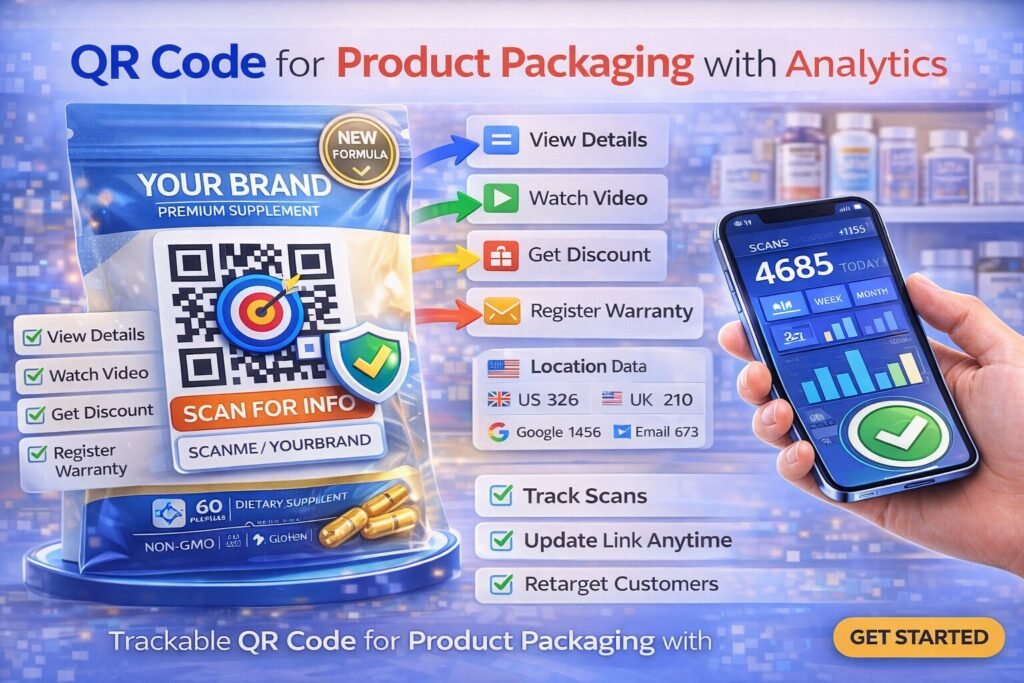
To bridge this massive attribution gap, elite marketers and supply chain directors are upgrading their physical assets into interactive digital nodes. By deploying a qr code for product packaging with analytics, modern brands are transforming passive cardboard and plastic into trackable, measurable, and highly profitable marketing channels.
This comprehensive, technical guide explores the architectural mechanics of dynamic packaging, details high-converting business applications across various industries, and provides a strategic blueprint for integrating data-driven QR technology directly into your manufacturing and marketing workflows.
What It Is: Moving Beyond Barcodes on Boxes
To fully leverage packaging technology, it is essential to understand the distinction between standard UPC barcodes, static consumer codes, and dynamic analytical infrastructure.
The Limitation of Static Retail Codes
The traditional barcode (UPC/EAN) exists solely for point-of-sale inventory management and pricing. It offers zero value to the consumer and zero marketing data to the brand. In recent years, companies attempted to engage consumers by placing free, static QR codes on packaging. However, a static code permanently encodes a specific URL into its visual matrix.
If you print one million cosmetic boxes with a static code linking to a promotional video, and that video is later removed from YouTube, those one million boxes now feature a broken link. Furthermore, static codes are fundamentally blind; they provide absolutely no data regarding who scanned them, where they were scanned, or when.
Defining Dynamic Smart Packaging
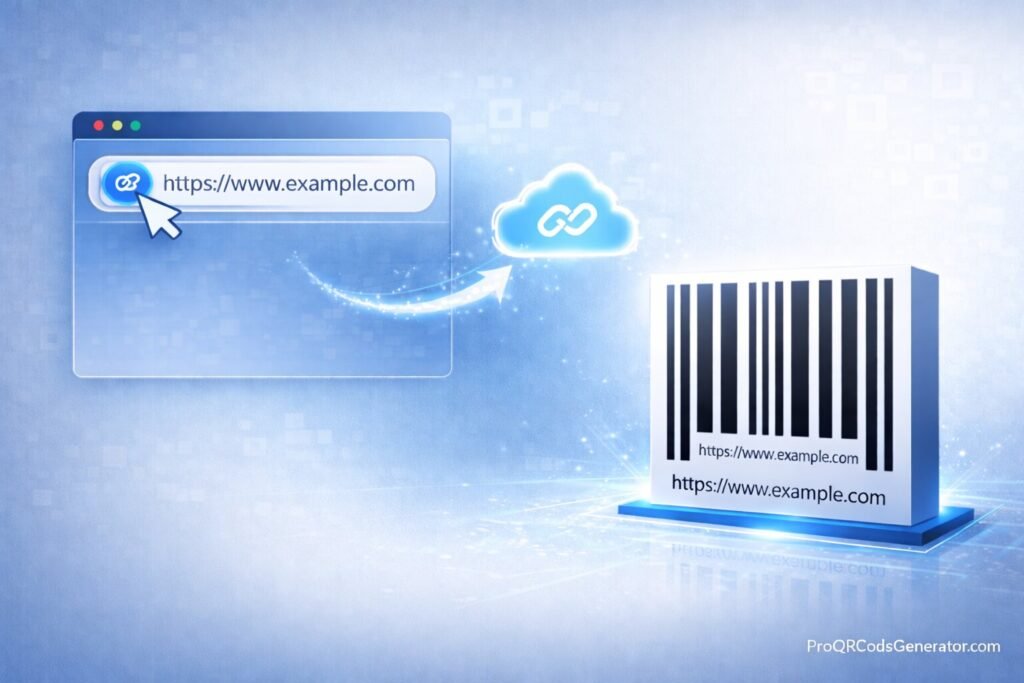
A qr code for product packaging with analytics utilizes an entirely different, dynamic architecture. Instead of hard-coding the final destination URL into the printed matrix, the code contains a secure, abbreviated “short link.”
When a consumer scans the packaging, they are routed through a cloud-based management server before seamlessly landing on your target destination (whether that is a product manual, an AR experience, or a warranty registration page). Because the printed code only points to your tracking server, you maintain absolute control over the final destination. You can change the digital experience assigned to that physical box infinitely, without ever altering the printed packaging. Simultaneously, the server logs critical, non-personally identifiable behavioral data for every single scan.
How It Works: The Technical Architecture of Smart Packaging
For brand managers and technical directors transitioning to data-driven collateral, understanding the server-side process of document and link delivery is crucial. When a customer scans your product box in a retail aisle or their living room, a highly sophisticated sequence occurs in roughly 150 to 300 milliseconds.
- The Scan Event: The consumer points their native smartphone camera at the QR code printed on your product label, bottle, or box. The device decodes the visual matrix and prompts the user to open the link.
- The Server Ping: The mobile browser requests the short URL encoded in the code. This request hits the routing servers of your professional QR management platform.
- Data Capture (The Analytics Engine): In a fraction of a second, the server logs the scan data. It records the exact timestamp, the device operating system (iOS vs. Android), the browser type, and the geolocation (city and region) based on the IP address.
- The HTTP 302 Redirect: The server queries its database to identify the current active destination assigned to that specific SKU’s short link. It then issues an HTTP 302 (“Temporary Redirect”) command.
- The Final Destination: The consumer’s mobile browser renders the intended digital experience—such as an interactive recipe, a setup tutorial, or an exclusive discount code for their next purchase.
By utilizing an enterprise-grade platform, this micro-transaction happens instantly, handling millions of global scans simultaneously without latency, even during peak holiday shopping seasons.
Core Benefits of Using a QR Code for Product Packaging with Analytics
Integrating a qr code for product packaging with analytics into your production line is not merely a marketing gimmick; it is a fundamental infrastructure upgrade that provides measurable operational and financial benefits.
1. Capturing Zero-Party and First-Party Data
With the depreciation of third-party cookies and sweeping privacy changes across iOS and Android ecosystems, acquiring first-party data is the most urgent mandate for marketers. When a user scans your packaging and lands on a mobile-optimized form to activate a warranty or claim a discount, you convert an anonymous retail buyer into a known profile in your CRM.
2. Absolute Version Control and Agility
Product lifecycles move faster than packaging print runs. If you link your packaging to a setup video, and the product interface updates six months later, you do not need to recall packaging or redesign your boxes. You simply log into your management dashboard and update the destination URL to point to the new video. The physical packaging on the shelf remains perfectly accurate.
3. Reduction of Print Overhead and Eco-Friendly Compliance
Regulatory requirements for consumer goods, electronics, and pharmaceuticals often demand extensive multi-language manuals and ingredient lists. Printing 50-page booklets to place inside every box severely impacts profit margins and environmental sustainability goals. By utilizing a dynamic code, you can print a minimalist, eco-friendly box that routes users to a comprehensive, digitized, and localized manual, saving millions in commercial printing costs.
4. Real-Time Post-Purchase Engagement
A consumer interacting with your product in their home is at the peak of their brand engagement. By strategically placing a code on the product itself (not just the exterior box, which gets thrown away), you create a permanent, direct line of communication for reordering, cross-selling, and customer support.
High-Converting Business Applications
How do industry leaders leverage this technology? They use it to mitigate friction, educate the consumer, and drive secondary revenue.
Direct-to-Consumer (DTC) Replenishment
For consumable products like coffee, cosmetics, or nutritional supplements, the primary goal is building a subscription or prompting a reorder. A qr code for product packaging with analytics placed under the lid or on the back of the bottle with the CTA “Scan to Reorder instantly” allows the user to buy the product the exact moment they realize they are running low, entirely bypassing competitors on Amazon or Google Search.
Authentication and Brand Protection
Counterfeiting costs global brands billions annually. Premium brands use serialized, dynamic QR codes on packaging. When a consumer scans the code, they are directed to a secure authentication page verifying the product’s origin. The analytics dashboard allows the brand to see if a single code has been scanned thousands of times in different countries—an immediate indicator of supply chain cloning.
Frictionless Warranty Registration
The traditional warranty registration card is a relic of the past, boasting completion rates of less than 3%. By converting this to a dynamic scan on the product box, users are taken to a pre-filled, mobile-responsive landing page. This dramatically increases registration rates, directly feeding your customer database.
Immersive Brand Storytelling and AR
Instead of static text, high-end food and beverage brands route users to interactive experiences. A wine bottle’s QR code can route to a video of the winemaker discussing the tasting notes, or an augmented reality (AR) experience detailing the vineyard’s history.
Real-World Industry Examples
To truly conceptualize the ROI of this technology, examine how distinct sectors apply dynamic packaging strategies.
- The Cosmetics Industry: A premium skincare brand removes the bulky, multi-language instruction leaflet from their packaging. Instead, a sleek code on the bottom of the jar reads, “Scan for Video Tutorial.” The user watches an esthetician demonstrate the application process. The brand checks their analytics dashboard and notices that 40% of scans occur in the evening, allowing them to optimize the timing of their email marketing blasts to match user behavior.
- The Food & Beverage Sector: A specialty pasta brand places a code on their retail boxes linking to a rotating “Recipe of the Month” PDF. In summer, the code routes to a pasta salad recipe; in winter, a baked ziti recipe. The analytics show exactly which regions are scanning the most, providing localized demand data that the brand leverages when negotiating shelf space with national grocery chains.
- Consumer Electronics: A smart-home device manufacturer places a code directly on their router hardware. When scanned, it bypasses the need to search for support articles and instantly opens a live WhatsApp chat with a customer service bot, reducing call-center volume by 30% and significantly improving the Net Promoter Score (NPS).
(Looking to implement these exact data-driven strategies? You can generate, customize, host, and track these enterprise-level packaging campaigns effortlessly using ProQRCodeGenerator.com as your central management hub.)
Step-by-Step Guide: Integrating Smart QR Codes into Your Packaging
If you are currently relying on static codes or outdated packaging designs, migrating to a professional dynamic platform is essential. Here is the operational blueprint for deploying a flawless smart packaging campaign.
Step 1: Define the Conversion Goal
Before logging into any software, determine the strategic purpose of the scan. Are you trying to capture an email address? Register a warranty? Drive an app download? The destination URL must be mobile-optimized and laser-focused on a single conversion action.
Step 2: Generate the Dynamic Framework
Log into your enterprise management dashboard. Select the dynamic URL or multi-link option. Input your optimized destination link. By ensuring the code is dynamic from day one, you secure the ability to track metrics and edit the destination after the packaging has been shipped to distributors.
Step 3: Brand the Visual Matrix
A generic, black-and-white QR code looks like an industrial afterthought. Utilize the design suite to match the matrix color to your brand’s pantone palette. Crucially, upload your company logo or a recognizable icon (like a play button for a video, or a document icon for a manual) directly into the center of the code. This drastically increases consumer trust and overall scan rates.
Step 4: Add a Conversion-Focused CTA Frame
This is the most critical design rule: Never print a naked QR code. Consumers need a compelling reason to pull out their phones. Wrap the code in a design frame with a clear, benefit-driven Call to Action (CTA). Effective CTAs include:
- “Scan for Setup Video & 10% Off”
- “Tap Here to Verify Authenticity”
- “Scan for Digital Recipe Book”
Step 5: Export in High-Resolution Vector Format
When transferring digital assets to your commercial packaging printer, never provide a PNG or JPEG file. These raster formats will pixelate during the printing process, rendering the code unscannable. Always download your code as an SVG or EPS vector file. Vector formats ensure the data matrix remains perfectly sharp, whether it is printed on a tiny lip balm tube or a massive corrugated shipping box.
Step 6: Physical Material Testing
Before authorizing a massive print run, print a prototype of your packaging. Test the code on curved surfaces (like bottles or cans) to ensure the camera can read the distorted matrix. Test it on glossy or metallic materials to ensure glare does not break the scan functionality.
Comparison: Free Static Generators vs. Enterprise SaaS Solutions
To ensure you make the correct infrastructural choice for your manufacturing line, review this direct capability comparison. Relying on free tools for retail packaging is a catastrophic operational risk.
| Supply Chain Capability | Free Static QR Code | Enterprise Dynamic QR Code |
| Change Destination After Printing | Impossible. Must recall/reprint. | Instant via backend login. |
| Track Scan Analytics | None. Completely blind. | Full real-time, granular data. |
| Fix Broken Links (404s) | Fatal error. Cannot be fixed. | Instantly update to a live URL. |
| Print Quality/Resolution | Often low-res JPEGs. | High-fidelity Vector (SVG/EPS). |
| Custom Branding/Logos | Basic or none. | Full brand identity integration. |
Analytics & Tracking: Transforming Physical Boxes into Data Nodes
When you utilize a qr code for product packaging with analytics, you unlock one of the most powerful intelligence tools in modern retail: behavioral data at the SKU level.
Measuring Total Scans vs. Unique Scanners
Your analytics dashboard will reveal a timeline of scan frequency, distinguishing between total scans and unique devices. If a single user scans the setup manual three times in one week, they are highly engaged (or highly confused), which informs how you should optimize your product onboarding process.
Device Demographics (iOS vs. Android)
Understanding what devices your customers use is vital for tech brands. If your analytics show that 75% of your scans originate from iOS devices, your marketing and development teams must prioritize Apple ecosystem integrations, App Store optimization, and Safari-compatible web experiences.
Geolocation and Market Penetration
For brands selling through third-party retailers (like Target or Sephora), you rarely know exactly where your products end up. Dynamic tracking solves this. By reviewing the geolocation data of your scans, you can visualize a heat map of your product consumption. If a regional snack brand notices a massive spike in scans coming from the Pacific Northwest, it provides data-backed leverage to pitch regional supermarkets in that specific territory for expanded shelf space.
(With a platform like ProQRCodeGenerator.com, all of these granular data points are automatically aggregated into clean, exportable dashboards that marketing teams can use to prove campaign ROI to stakeholders.)
ROI Discussion: How Smart Packaging Pays for Itself
Many procurement managers hesitate to pay an annual subscription for QR management software, assuming that “free” static generators accomplish the same task. A basic financial analysis proves this is a mathematical fallacy that threatens profit margins.
The Cost of Rigid Print Delivery:
Imagine a consumer electronics brand that ships 100,000 units of a new smart speaker globally.
- They print a heavy, 40-page, multi-language manual to put inside every box.
- Cost of printing 100,000 manuals: $45,000.
- Three months post-launch, a firmware update changes how the device connects to Wi-Fi.
- The Result: The $45,000 investment in manuals is now entirely obsolete. The brand faces increased customer support calls, negative reviews, and a massive loss of brand trust.
The ROI of Dynamic Infrastructure:
By deploying dynamic smart packaging:
- The brand prints a single, high-quality insert card with a dynamic code routing to a digital manual repository.
- Cost of printing 100,000 insert cards: $4,000.
- Annual QR Software Subscription: ~$360.
- When the firmware updates, the technical team simply updates the PDF hosted on the tracking server. All printed cards remain perfectly accurate.
- Total Investment: ~$4,360.
In this scenario, utilizing dynamic architecture saves the company over $40,000 on a single product run, entirely eliminates the logistical nightmare of outdated information, and provides actual data on how many consumers are engaging with the support materials.
Critical Mistakes to Avoid on Your Production Line
The ability to deliver digital experiences on the fly is powerful, but poor physical execution will destroy your scan rates. Avoid these common manufacturing and design pitfalls:
1. Printing on Folds, Seams, or Extreme Curves
A smartphone camera needs to identify the three distinct positioning squares in the corners of a QR code to decode it. If you print the code across the fold of a box, on a wrinkled bag, or wrapping too far around a cylindrical bottle, the camera cannot read it. Always place the code on a flat, unobstructed surface.
2. Low Contrast and Inverse Colors
For maximum scannability, there must be high contrast between the code’s matrix and the background. Dark codes on light backgrounds work best. While custom colors are great for branding, avoid using light pastel colors on white backgrounds. Additionally, avoid “inverse codes” (white codes on a black background) as many older smartphone cameras struggle to process inverted data matrices.
3. The Naked Code Epidemic
As emphasized in the step-by-step guide, dropping a black-and-white square onto retail packaging without context is a wasted opportunity. A consumer will not scan a code if they do not know the reward. Always use a CTA frame.
4. Ignoring the Quiet Zone
Every QR code requires a “quiet zone”—a clear margin of empty space around the perimeter of the code. If your graphic designer places text, borders, or other graphics too close to the matrix, it will interfere with the camera’s ability to isolate and scan the code.
Optimization Tips for Maximum Scan Rates
To maximize the impact of your digital packaging, integrate these advanced optimization strategies.
- Incentivize the Scan: The most effective way to drive packaging engagement is through an immediate value exchange. Offer a 15% discount on their next purchase, entry into a sweepstakes, or exclusive access to a digital product in exchange for scanning and entering their email address.
- Implement Lead Gates: Do not link the QR code directly to a generic homepage. Route the user to a mobile-responsive landing page that requires an email address or SMS opt-in to unlock the core value (like a warranty or a free digital asset). This bridges the gap between offline interaction and online CRM data capture.
- A/B Test Your CTAs: If you have multiple product lines, use different CTAs to see what drives behavior. For example, test “Scan to Reorder” on one SKU and “Scan for 10% Off” on another, then use your analytics dashboard to see which phrase yields a higher conversion rate.
Security Considerations and Brand Protection
As digital interaction with physical products increases, so do security protocols. Whether you are providing software updates or capturing consumer data, security must be prioritized at the enterprise level.
Protecting Against Quishing (QR Phishing)
Quishing occurs when a malicious actor places fake QR stickers over your legitimate codes (usually in a retail environment), routing your customers to a fraudulent website designed to steal credit card info or passwords.
- The Defense: Never use cheap stickers to apply QR codes to your products; integrate the code directly into the printed packaging artwork. Additionally, by embedding your official company logo into the center of the qr code for product packaging with analytics, it becomes immediately obvious to your customers if a generic, unbranded sticker has been illicitly placed over it.
Secure Routing and SSL Encryption
Ensure your QR provider utilizes enterprise-grade SSL/TLS encryption (HTTPS). This guarantees that when a customer scans your packaging, the connection between their phone and the routing servers is secure, protecting your brand reputation and the user’s mobile device. Professional SaaS solutions ensure all routing URLs are heavily secured.
Frequently Asked Questions (FAQ)
What is a QR code for product packaging with analytics?
It is an editable, dynamic QR code printed on retail packaging that routes a consumer’s smartphone through a secure tracking server before delivering a digital experience. This allows the brand to track scan locations, times, and device types while maintaining the ability to update the destination link at any time.
Can I update the URL without changing the printed packaging?
Yes. This is the primary operational benefit of dynamic codes. You can log into your management dashboard and swap the destination URL. The physical QR code printed on your boxes will instantly route users to the newly assigned link.
Do packaging QR codes track personal consumer data?
By default, dynamic QR codes track aggregate, non-personally identifiable analytics (total scans, unique devices, city/region location, and timestamps). They do not collect names or emails unless you specifically link the code to a lead-capture form where the user willingly inputs their information.
How small can a QR code be on product packaging?
The minimum recommended size for a QR code on packaging is 0.8 x 0.8 inches (2 x 2 cm). Anything smaller risks becoming unscannable for standard smartphone cameras, especially if printed on textured or glossy materials.
What is the best file format for printing QR codes on boxes?
Always export and provide your packaging manufacturer with vector files (SVG or EPS format). Vector files scale perfectly without pixelating, ensuring the matrix remains sharp and scannable during commercial printing processes.
Why does my packaging QR code link say 404 Error?
If you used a free static code and later moved or deleted the destination page on your website, the link is permanently broken. If you used a dynamic code, simply log into your dashboard and update the routing URL to the correct, live page.
Should I put the QR code on the outside or inside of the packaging?
It depends on your goal. If you want to drive pre-purchase education in the retail aisle, place it on the exterior. If you want to drive post-purchase engagement, warranties, or reorders, place it on an interior insert card or directly on the product itself.
Can a QR code link to an app store download?
Yes. Advanced dynamic codes can detect the user’s operating system and route iOS users to the Apple App Store and Android users to the Google Play Store using a single printed code.
How do I track which retail stores generate the most scans?
While you cannot track the exact store aisle natively, the geolocation analytics provided by a dynamic tracking dashboard will show you heat maps of city and regional scan volume, helping you identify high-performing geographic markets.
Can a packaging QR code hold multiple links?
Yes, by linking the dynamic code to a mobile “Link Tree” or a custom landing page, a single scan can give a consumer access to the product manual, the reorder page, and your social media channels simultaneously.
Are dynamic QR codes safe for consumers to scan?
Yes, provided the code is generated by a reputable business using secure (HTTPS) hosting and the physical packaging has not been tampered with or covered by a malicious sticker.
Can I use a QR code for supply chain authentication?
Yes. High-end brands use serialized, dynamic QR codes to verify authenticity. If a brand sees a single code scanned in ten different countries simultaneously on their analytics dashboard, they can identify counterfeit operations.
Do users need a special app to scan product packaging?
No. All modern iOS (Apple) and Android smartphones have QR decoding software built natively into their standard camera applications. Users simply point their camera at the packaging.
What is the difference between UPC barcodes and QR codes?
UPC barcodes hold a small string of numbers used by retailers for pricing and inventory at the register. QR codes are two-dimensional matrices that hold complex data, such as URLs, allowing consumers to interact digitally with the product.
What is the best software to create analytical QR codes for packaging?
Enterprise brands should seek platforms that offer guaranteed server uptime, real-time granular analytics, high-resolution vector exports, and custom branding tools. Dedicated SaaS solutions built for business, like ProQRCodeGenerator.com, are ideal for high-volume manufacturing environments.
Conclusion: Future-Proofing Your Retail Strategy
The physical product box is the final touchpoint in your supply chain, but it should be the first touchpoint in your post-purchase customer relationship. When you rely on static print materials or blind UPC barcodes, you surrender control over versioning, incur unnecessary printing costs, and operate in an analytical void, allowing your customers to slip away the moment they leave the store.
Deploying a qr code for product packaging with analytics is a fundamental upgrade to your organization’s infrastructure. You are transforming passive cardboard into interactive data portals. By abandoning rigid, untrackable distribution methods and embracing professional dynamic routing, you eliminate the logistical nightmare of obsolete packaging, ensure your customers always receive the most accurate product information, and acquire the hard first-party data necessary to measure the true ROI of your retail presence.
Stop treating your packaging as a disposable commodity. Take total control of your offline-to-online customer journey and build a smarter, more responsive operational workflow.