
Table of Contents
Real estate marketing has evolved rapidly in the digital era. Buyers now expect instant access to property information, photos, virtual tours, and contact options—often directly from their smartphones. One of the simplest technologies enabling this shift is the QR code.
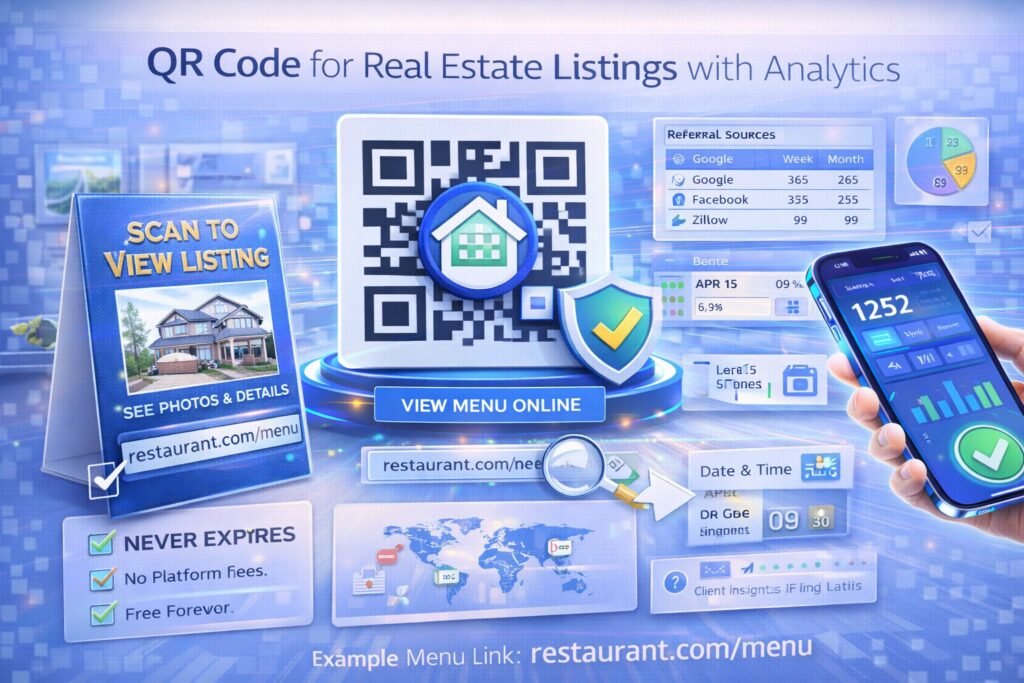
A QR code for real estate listings with analytics allows agents to place a scannable code on property signs, flyers, brochures, and business cards. When a potential buyer scans the code, they are immediately directed to a listing page, virtual tour, or contact form. At the same time, the realtor can track scan data and measure marketing performance.
This combination of instant access and measurable analytics makes QR codes one of the most effective tools for modern property marketing.
In this guide, you will learn:
- How QR codes work for property listings
- Why real estate agents use QR codes for marketing
- How QR analytics track buyer engagement
- Step-by-step instructions for creating listing QR codes
- Lead generation strategies using QR codes
- Placement strategies for yard signs and marketing materials
- ROI benefits for property campaigns
- Common mistakes realtors should avoid
By the end, you will understand how QR codes can transform traditional real estate advertising into a measurable, data-driven marketing system.
What Is a Real Estate QR Code?
A real estate QR code is a scannable code that links directly to property information when scanned with a smartphone camera.
Instead of typing a website address manually, buyers simply scan the code to access listing details instantly.
Real estate QR codes typically link to:
- property listing pages
- MLS listings
- virtual home tours
- photo galleries
- open house registration pages
- contact forms
For example, a QR code placed on a yard sign can link directly to the home’s online listing.
When a buyer scans it:
- Their smartphone camera reads the QR code
- The phone opens the listing page automatically
- The buyer can view photos, pricing, and details
This creates a seamless bridge between offline property advertising and online engagement.
Why Realtors Use QR Codes for Property Listings
Real estate marketing relies heavily on visibility. QR codes allow agents to convert physical marketing materials into digital experiences.
Here are some key reasons realtors use QR codes.
Instant Property Access
Potential buyers often drive past properties outside of business hours. QR codes allow them to access the listing immediately without contacting an agent.
Better Mobile Experience
Most home searches now happen on smartphones. QR codes allow buyers to access listing pages optimized for mobile viewing.
More Engagement from Yard Signs
Traditional yard signs contain limited information. QR codes expand them into digital entry points.
Buyers scanning a QR code can see:
- interior photos
- property videos
- floor plans
- neighborhood details
Lead Generation Opportunities
QR codes can direct buyers to contact forms where they can request showings or additional information.
Measurable Marketing Performance
When combined with analytics, QR codes allow agents to track buyer engagement and optimize their marketing strategy.
How QR Code Analytics Works for Property Marketing
One of the most powerful advantages of using a QR code for real estate listings with analytics is the ability to track buyer behavior.
Dynamic QR codes collect scan data when someone scans the code.
Typical analytics include:
- total number of scans
- unique visitors
- geographic location of scans
- time and date of engagement
- device type
For example, a realtor might discover that:
- most scans occur on weekends
- most engagement comes from local buyers
- certain listings receive more scans than others
These insights help agents refine their marketing strategies.
Platforms such as ProQRCodeGenerator provide dashboards that visualize scan activity and allow real estate professionals to measure the effectiveness of their property marketing campaigns.
Static vs Dynamic QR Codes for Real Estate
QR codes fall into two categories: static and dynamic.
| Feature | Static QR Code | Dynamic QR Code |
|---|---|---|
| Editable listing link | ❌ No | ✅ Yes |
| Analytics tracking | ❌ No | ✅ Yes |
| Campaign flexibility | Limited | High |
| Marketing optimization | No | Yes |
Static QR Codes
Static QR codes contain the final destination link embedded directly inside the code.
Example:
https://example.com/property123
If the listing changes or expires, the QR code becomes outdated.
Dynamic QR Codes
Dynamic QR codes use a redirect system.
When someone scans the code:
- The request goes to a redirect server
- Analytics data is recorded
- The user is redirected to the listing page
Because the destination link is stored on a server, it can be updated anytime.
This allows agents to update property links without replacing printed materials.
Platforms like ProQRCodeGenerator.com provide dynamic QR code generation with analytics tracking and editing capabilities designed for marketing campaigns.
Step-by-Step: Creating a QR Code for Property Listings
Creating a QR code for a real estate listing is simple.
Step 1 – Prepare the Listing Page
First ensure the property has a dedicated webpage.
Examples include:
- MLS listing page
- personal real estate website
- landing page for the property
The page should include:
- property photos
- description
- price
- contact information
Step 2 – Open a QR Code Generator
Use a QR generator that supports dynamic codes and analytics.
Step 3 – Enter the Property URL
Paste the listing link.
Example:
https://realestate.com/listing/modern-home
The generator will convert the link into a QR code.
Step 4 – Customize the QR Code
Branding can increase scan engagement.
Common customizations include:
- company colors
- logo inside the QR code
- frame with instructions
Example call-to-action text:
- Scan for property details
- Scan for virtual tour
Step 5 – Download and Print the QR Code
Export the code in high resolution.
Recommended formats include:
- SVG
- PNG
Place the QR code on property marketing materials.
Best Tools for Real Estate QR Codes
Real estate professionals benefit from QR platforms that provide:
- dynamic QR code editing
- analytics dashboards
- custom branding
- unlimited scans
- campaign tracking
Platforms such as ProQRCodeGenerator.com combine these capabilities, allowing agents to create trackable QR codes for property listings and marketing materials.
Using a professional platform ensures QR campaigns remain reliable and measurable.
Tracking Property Engagement with QR Analytics
Analytics allow agents to monitor how buyers interact with listings.
Example scan dashboard data might include:
| Metric | Example Data |
|---|---|
| Total scans | 180 |
| Unique users | 120 |
| Top scan location | Dallas |
| Peak scan time | Saturday afternoon |
These insights reveal which listings generate the most interest.
Agents can use this information to adjust their marketing strategies.
Real Estate Marketing Use Cases
QR codes can be used across multiple real estate marketing channels.
Property Yard Signs
The most common use case.
Passersby scan the code to view listing details instantly.
Open House Promotions
QR codes placed at open houses allow visitors to:
- download brochures
- view floor plans
- sign up for updates
Realtor Business Cards
Agents include QR codes linking to their property listings or portfolios.
Listing Brochures
Printed brochures can include QR codes linking to virtual tours.
Social Media Campaigns
QR codes can direct buyers to social media listing pages.
Lead Generation with QR Codes
QR codes can significantly improve real estate lead generation.
Instead of linking only to listing pages, agents can use QR codes to direct buyers to:
- contact forms
- showing requests
- mortgage calculators
- neighborhood guides
This creates a direct conversion path from physical marketing to digital leads.
Dynamic QR platforms allow agents to track which marketing materials generate the most leads.
ROI of QR Code Property Marketing
QR codes allow realtors to measure the performance of their marketing campaigns.
Example scenario:
A realtor places QR codes on 50 property flyers.
Analytics show:
- 300 scans
- 40 showing requests
If 5 of those showings convert into sales, the QR campaign becomes a highly measurable marketing channel.
Without analytics, it would be impossible to attribute those leads to the flyer campaign.
Common Mistakes Realtors Should Avoid
Several mistakes can reduce QR code effectiveness.
Poor QR Placement
QR codes should be placed where buyers can easily scan them.
Using Static QR Codes
Static codes cannot be updated or tracked.
Dynamic codes are more suitable for marketing.
Too Small QR Codes
Small codes are difficult to scan.
Minimum recommended size is about 2–3 cm.
No Call-to-Action
Always instruct users to scan.
Example:
- Scan for property details
Optimization Tips for Property QR Codes
To maximize scan rates:
- place QR codes at eye level
- ensure strong color contrast
- include instructions near the code
- use mobile-friendly listing pages
- track analytics regularly
These improvements significantly increase engagement.
Security & Privacy Considerations
Real estate QR codes should follow security best practices.
Important considerations include:
- secure HTTPS listing pages
- trusted QR platforms
- safe redirect systems
Professional QR platforms maintain secure infrastructure to protect both buyers and realtors.
Frequently Asked Questions
How do real estate agents use QR codes?
Agents place QR codes on property signs, flyers, brochures, and business cards to link buyers directly to property listings.
Can QR codes track property listing views?
Yes, dynamic QR codes allow scan tracking and engagement analytics.
Where should QR codes be placed on property signs?
Typically near the center or bottom of the sign where it is easily visible.
Can QR codes link to virtual home tours?
Yes, QR codes often direct buyers to video tours or 3D walkthroughs.
Do QR codes help generate real estate leads?
Yes, QR codes can direct buyers to contact forms or showing requests.
Conclusion: Using QR Codes to Modernize Real Estate Marketing
Using a QR code for real estate listings with analytics allows realtors to transform traditional property marketing into a modern, data-driven strategy.
QR codes provide:
- instant property access for buyers
- mobile-friendly listing experiences
- measurable marketing analytics
- improved lead generation opportunities
Dynamic QR code platforms such as ProQRCodeGenerator.com allow real estate professionals to create trackable QR codes, update listing links anytime, customize branded designs, and monitor scan engagement across marketing campaigns.
As property buyers increasingly rely on mobile devices for home searches, QR codes are becoming an essential tool for modern real estate marketing.