Table of Contents
In the hyper-competitive world of modern hospitality, operational efficiency is no longer a luxury—it is a survival mechanism. For small restaurant owners, every cent spent on reprinting menus and every second lost to manual updates directly erodes profit margins. This is why the search for the best qr code generator for small restaurants has shifted from a simple tech utility to a core strategic decision.
The days of dusty, laminated paper menus are fading. Today’s restaurateurs require agile digital tools that allow for instant updates, detailed guest analytics, and brand consistency—all without needing to touch the physical assets on the tables.
Why Small Restaurants Need More Than a Free QR Code
It is tempting for a small business owner to use the first “free” QR generator they find on a search engine. However, in the hospitality sector, “free” often comes with hidden costs that can damage your brand and operations.
The Hidden Costs of Static Menus
The most common mistake small restaurants make is using Static QR Codes. These codes encode the destination link directly into the black-and-white pattern. If you change your website URL, delete a PDF menu, or simply want to update a price, the printed code on your tables will lead to a “404 Not Found” error. You are then forced to pay for a total reprint and redistribute every table tent, sticker, and flyer.
Digital Agility in a Volatile Economy
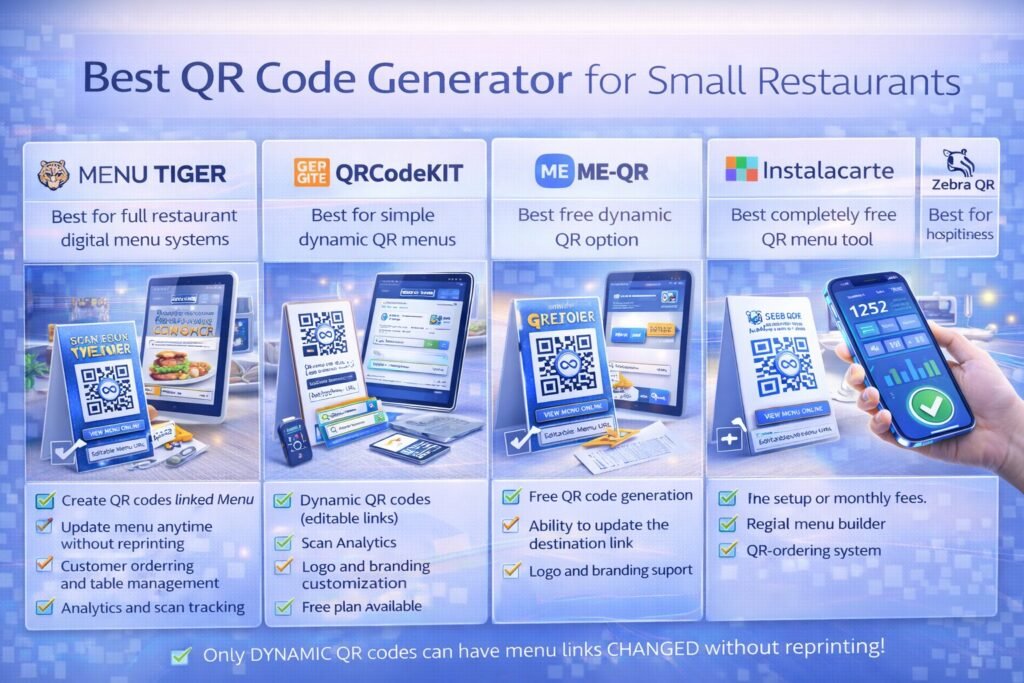
In a volatile economy where ingredient costs fluctuate daily, your business needs flexibility. The professional standard is the Dynamic QR Code. Unlike static versions, a dynamic code allows you to change the destination URL or file behind the code at any time. Whether you’re “86ing” an out-of-stock item or launching a flash happy hour, you can update your menu in seconds from a backend dashboard.
What is a Dynamic QR Code? (The Modern Restaurant Standard)
To find the best qr code generator for small restaurants, one must look for dynamic routing capabilities.
How Dynamic Routing Saves Your Printing Budget
A dynamic QR code uses a short redirection URL. When a customer scans the code, they are briefly routed through a management server before being sent to your menu. Because the physical pattern only points to the server—not the final file—you have infinite control.
Professional platforms like ProQRCodeGenerator.com provide this infrastructure, ensuring that your table assets remain permanent even if your digital content changes daily. This “print once, update forever” model is the primary reason small businesses are migrating away from basic generators.
Key Features to Look for in the Best QR Code Generator
When evaluating software, small restaurants should prioritize features that impact both the customer experience and the restaurant’s bottom line.
1. Custom Branded QR Codes
Your restaurant’s decor is carefully curated. A generic, clinical-looking QR code can clash with your aesthetic. The best generators allow you to:
- Incorporate your restaurant’s logo.
- Match the code’s colors to your brand palette.
- Customize the “eyes” and pattern of the code.
- Add a “Call to Action” (CTA) frame, such as “Scan for Menu.”
2. Advanced Analytics: Understanding Your Guests
Data is the “special sauce” of successful marketing. A professional generator doesn’t just show you a menu; it shows you who is looking at it. By tracking scan data, you can see:
- Peak Dining Times: When are scans most frequent?
- Device Types: Are your customers using iPhones or Androids? (Crucial for mobile optimization).
- Location Tracking: Which specific tables or areas of the restaurant have the highest engagement?
3. Multiple QR Types for Total Coverage
A restaurant is more than just a menu. The best qr code generator for small restaurants should offer:
- PDF QR Codes: For instant menu viewing.
- Wi-Fi QR Codes: To help guests connect to your network without typing long passwords.
- WhatsApp/Social QR: For instant bookings or social media growth.
- vCard QR: For the owner or manager’s digital business card.
Business Applications: How Small Restaurants Use QR Technology
Modern technology allows small venues to compete with large chains by automating guest interactions.
Beyond the Menu: Feedback and Loyalty
Smart restaurateurs use dynamic codes to capture guest sentiment. A code on a receipt can link to a WhatsApp chat or a Google Review page, allowing for instant feedback. By using ProQRCodeGenerator.com, you can redirect a “Complaints” code to a private form while directing “Five Star” reviews to public platforms.
Seasonal and Daily Specials Management
Managing a “Catch of the Day” or a seasonal holiday menu is effortless with dynamic codes. Instead of explaining specials verbally, servers can point to a branded QR code that has been updated that morning with high-resolution photos of the daily offerings.
Comparison: Static vs. Dynamic QR Codes for Hospitality
| Feature | Static QR Code | Dynamic QR (The Pro Choice) |
| Edit Link After Printing | No | Yes (Unlimited) |
| Scan Analytics | No | Yes (Real-time) |
| Custom Branding | Basic | Advanced (Logo/Color) |
| Scan Limits | Often Capped | Unlimited |
| Security | Low | High (SSL Encryption) |
The Financial ROI: Subscription vs. Printing Costs
Small restaurant owners often worry about the monthly cost of a SaaS platform. However, the ROI is simple math.
- Cost of a professional subscription: Roughly $15–$30/month.
- Cost of reprinting 50 table tents: $150–$300 (plus design time).
If you update your menu just once a quarter, the dynamic solution has already paid for itself. When you add the value of the customer data collected, a professional tool like Pro QR Code Generator becomes a revenue generator rather than an expense.
Step-by-Step: Setting Up Your Restaurant QR Ecosystem
- Select Your Content: Choose between linking to a website URL or uploading a high-quality PDF.
- Generate Dynamically: Ensure you select the “Dynamic” option so you can edit it later.
- Design for Scannability: Use high contrast (dark codes on light backgrounds) and add your logo.
- Download in Vector Format: Always use SVG or EPS formats for printing to ensure the code remains crisp even on large posters.
- Test Before Mass Printing: Always scan your code with both an iPhone and an Android to ensure it loads in under 2 seconds.
Common Mistakes Small Restaurants Make
- Using Scan-Limited Tools: Many free generators stop working after 100 scans, leaving your tables with “dead” codes during a busy Saturday night.
- Forgetting Mobile Optimization: If your QR code leads to a massive 20MB PDF that isn’t mobile-friendly, customers will give up.
- Poor Placement: Avoid putting codes behind reflective glass or in dark corners where cameras struggle to focus.
Security and Trust: Protecting Your Diners
Security is paramount. “Quishing” (QR phishing) is a growing concern. Professional platforms use SSL encryption and secure redirects to ensure that when a customer scans your code, they are safe. Using a reputable provider like ProQRCodeGenerator.com ensures that your links aren’t hijacked by malicious third parties.
FAQ: Everything You Need to Know
Do QR codes for menus expire?
Static codes don’t expire, but they can’t be changed. Dynamic codes last as long as your subscription is active.
Can I track how many people scanned the menu today?
Yes, professional generators provide real-time dashboards showing exactly how many scans occurred and at what time.
Is it better to link to a website or a PDF?
A mobile-optimized website is usually faster, but a PDF is easier for small restaurants to update without a web developer.
Conclusion: Choosing the Best QR Code Generator for Your Future
Selecting the best qr code generator for small restaurants is about more than just a 2D barcode; it is about choosing a partner for your restaurant’s digital transformation. By moving away from static, unreliable tools and embracing professional dynamic infrastructure, you save money, gain customer insights, and future-proof your business.