
Table of Contents
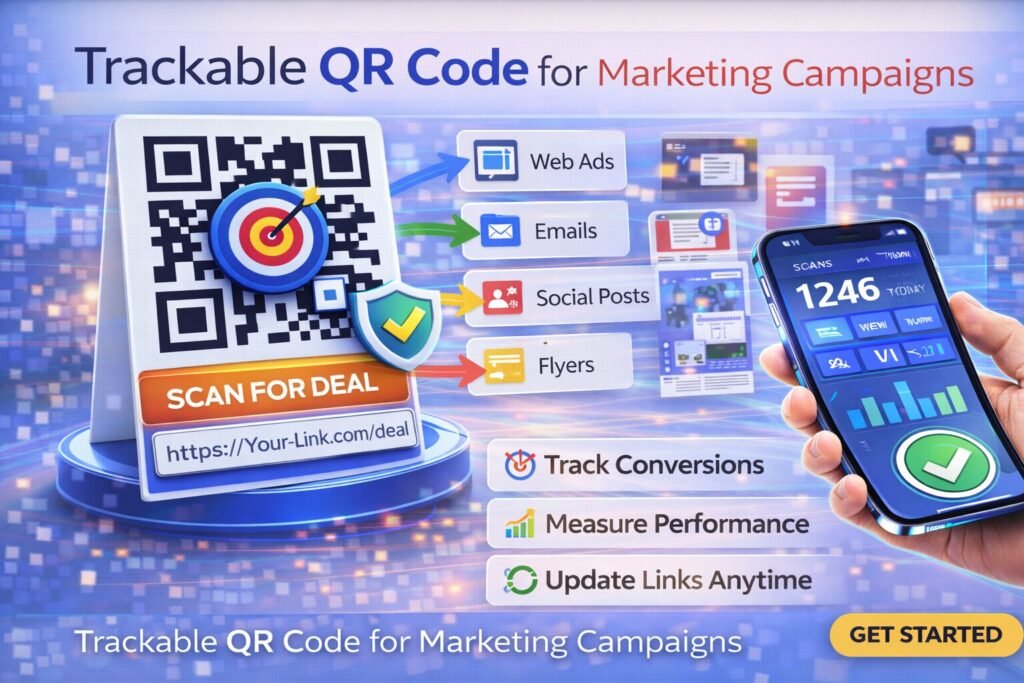
Modern marketing is increasingly data-driven. Brands no longer rely solely on impressions or vague engagement indicators — they demand measurable insights, clear attribution, and real-time performance data. One of the most effective tools enabling this shift is the trackable QR code for marketing campaigns.
Unlike traditional QR codes that simply direct users to a single destination, trackable QR codes provide detailed analytics on how, when, and where customers engage with marketing materials. This transforms QR codes from basic utility tools into powerful performance measurement systems.
In this guide, you’ll learn:
- What trackable QR codes are and how they work
- Why marketers rely on QR analytics
- How to create trackable QR codes step-by-step
- What metrics matter in QR marketing campaigns
- Real marketing use cases and ROI scenarios
- Optimization strategies for campaign success
- Common mistakes marketers should avoid
By the end, you’ll understand how to use QR tracking to improve campaign performance and marketing attribution.
What Is a Trackable QR Code?
A trackable QR code is a dynamic QR code that records scan activity and user engagement data. When someone scans the code, the system logs information such as location, device type, and time of interaction.
This data enables marketers to evaluate campaign effectiveness.
Typical tracking data includes:
- total scans
- unique users
- geographic location
- scan timestamps
- device type
Unlike static QR codes, which embed fixed URLs, trackable QR codes use redirect systems that allow analytics collection and link editing.
Why Marketers Use Trackable QR Codes
Marketing teams increasingly adopt QR tracking because it connects offline campaigns with measurable digital outcomes.
Offline-to-Online Attribution
Trackable QR codes bridge physical marketing channels and digital analytics.
Examples include:
- billboards
- flyers
- packaging
- retail displays
Marketers can measure how offline exposure translates into online engagement.
Real-Time Campaign Insights
QR analytics dashboards allow marketers to monitor performance in real time.
If engagement drops, campaigns can be adjusted immediately.
Customer Journey Tracking
QR codes provide insight into how users interact with brand touchpoints.
This helps optimize conversion funnels.
Improved Lead Generation
QR codes can direct users to landing pages with forms or offers.
Tracking helps identify which campaigns generate the most leads.
Personalization Opportunities
Dynamic QR codes allow marketers to segment audiences and tailor content.
How QR Code Tracking Works
Trackable QR codes operate through a server-based redirect infrastructure.
Instead of encoding the final destination URL, the QR code contains a redirect link managed by a platform.
Example encoded link:
qrplatform.com/campaign123
When scanned:
- The redirect server receives the request
- Scan data is logged
- The user is redirected to the campaign landing page
This architecture enables both tracking and editing capabilities.
Platforms such as ProQRCodeGenerator.com provide analytics dashboards where marketers can monitor scan activity and adjust campaign links.
Static vs Dynamic QR Marketing Codes
Understanding the difference between static and dynamic QR codes is essential.
| Feature | Static QR Code | Trackable Dynamic QR |
|---|---|---|
| Scan tracking | ❌ No | ✅ Yes |
| Editable link | ❌ No | ✅ Yes |
| Campaign analytics | ❌ No | ✅ Yes |
| Marketing optimization | Limited | Advanced |
Static QR codes are suitable for simple use cases, but dynamic QR codes provide the flexibility required for marketing campaigns.
Step-by-Step Guide to Creating Trackable QR Codes
Creating a trackable QR code involves several steps.
Step 1 – Define Campaign Goal
Determine the purpose of the QR campaign.
Common goals include:
- lead generation
- product promotion
- event registration
- app downloads
Step 2 – Create a Landing Page
Prepare a mobile-optimized destination page.
Example:
https://brand.com/summer-campaign
Step 3 – Choose a Dynamic QR Platform
Select a QR generator that supports analytics tracking and editing.
Step 4 – Generate the QR Code
Enter the campaign URL into the generator.
Customize branding and call-to-action messaging.
Step 5 – Deploy Across Marketing Channels
Place QR codes on:
- posters
- packaging
- social ads
- print materials
Step 6 – Monitor Analytics
Track performance through the dashboard.
Platforms like ProQRCodeGenerator.com allow marketers to analyze scan trends and adjust campaigns accordingly.
Best Tools for Marketing QR Tracking
Professional QR marketing requires platforms that offer:
- dynamic QR creation
- analytics dashboards
- campaign segmentation
- custom branding
- unlimited scans
These tools help marketers manage campaigns effectively.
QR Analytics Metrics Explained
Understanding QR campaign data is essential for optimization.
Key metrics include:
Scan Volume
Total number of scans indicates campaign reach.
Unique Users
Shows how many individuals engaged with the QR code.
Geographic Data
Helps identify regions with high engagement.
Time-Based Analytics
Reveals peak interaction periods.
Example dashboard:
| Metric | Example |
|---|---|
| Total scans | 3,500 |
| Unique users | 2,200 |
| Top city | London |
| Peak time | 8 PM |
These insights help refine targeting strategies.
Marketing Campaign Use Cases
Trackable QR codes are used across industries.
Retail Promotions
Stores use QR codes on displays to direct customers to promotions.
Event Marketing
Event organizers track registration campaigns.
Product Packaging
Brands monitor engagement from packaging QR codes.
Real Estate
Agents track interest in property listings.
Restaurant Marketing
Restaurants measure menu engagement.
Measuring ROI with QR Codes
Trackable QR codes allow marketers to measure campaign effectiveness.
Example:
A campaign distributes 10,000 flyers.
Analytics show:
- 1,200 scans
- 300 conversions
Conversion rate:
300 ÷ 1,200 = 25%
This measurable ROI helps justify marketing investments.
Common Marketing Mistakes
Some errors reduce QR campaign effectiveness.
Using Static QR Codes
Static codes prevent tracking and optimization.
Poor Placement
QR codes must be visible and accessible.
Weak Call-to-Action
Users need clear instructions to scan.
Ignoring Analytics
Scan data must be reviewed regularly.
Optimization Tips for QR Campaigns
To improve performance:
- use strong visual contrast
- include clear instructions
- ensure fast-loading landing pages
- test campaigns before launch
These practices increase engagement.
Security & Privacy Considerations
Marketing QR campaigns should follow best practices.
Important measures include:
- secure HTTPS redirects
- compliance with data regulations
- trusted QR platforms
Professional QR infrastructure helps maintain campaign integrity.
Frequently Asked Questions
How do trackable QR codes work?
They log scan data through server-based redirect systems.
Can QR codes track marketing campaigns?
Yes, dynamic QR codes provide detailed analytics.
What metrics can QR codes track?
Location, time, device type, and engagement volume.
Are trackable QR codes safe?
Yes, when hosted on secure platforms.
Do trackable QR codes expire?
They remain active as long as the hosting platform is active.
Conclusion: Using Trackable QR Codes to Improve Marketing Performance
A trackable QR code for marketing campaigns allows brands to transform traditional marketing into measurable, data-driven strategies.
Dynamic QR systems provide:
- real-time campaign insights
- customer engagement analytics
- improved marketing attribution
- conversion tracking
- flexible campaign updates
Platforms such as ProQRCodeGenerator.com enable marketers to generate dynamic QR codes, track performance metrics, customize branding, and manage campaigns through centralized dashboards.
As marketing continues to shift toward measurable outcomes, trackable QR codes are becoming essential tools for modern marketing success.